A driving test fault is one of 3 types: a driving fault (a minor), a serious fault or a dangerous fault. You pass with up to 15 driving faults and no serious or dangerous fault. Below are the 3 types, the pass mark, and the point where a repeated minor turns into a major. Then come the 24 areas on your test report, the most common faults, what examiner took action means, and how to find your own faults first.
What are the 3 types of driving test fault?
There are 3 types of driving test fault: a driving fault, a serious fault and a dangerous fault. Learners call the first a minor and the other 2 majors. The table below gives the official definition of each one and what it does to your result:
| Fault type | Official definition | Effect |
|---|---|---|
| Driving fault | Not potentially dangerous, but repeating the same one can turn it into a serious fault | Up to 15 allowed |
| Serious fault | Something potentially dangerous | One is a fail |
| Dangerous fault | Actual danger to you, the examiner, the public or property | One is a fail |
Source: GOV.UK driving test faults and your result (checked 13 November 2026).
The difference between serious and dangerous is whether anything was actually at risk. Pulling out at a junction without looking properly is potentially dangerous, so it is a serious fault. Pulling out and making another driver brake is a dangerous fault. The examiner records the same mistake differently depending on what was around you at the time.
Examiners do not stop a test for a fault. GOV.UK says the examiner stops a test only when your driving is a danger to other road users. You can make a mistake, collect a serious fault and still drive the rest of the route. The examiner marks the whole test either way.
How many faults can you get and still pass?
You pass with up to 15 driving faults and no serious or dangerous fault (GOV.UK). The 16th driving fault is a fail, and a single serious or dangerous fault is a fail whether you have 0 other faults or 14.
Most passes are not clean sheets. In 2025-26 the DVSA conducted 1,998,621 car tests and 1,000,043 of them were passes, a pass rate of 50.0%. Of those passes, 50,787 had zero faults: 2.5% of all tests and 5.1% of passes. The table below shows how the zero-fault share has moved over 3 years:
| Year | Zero-fault passes | Share of passes |
|---|---|---|
| 2023-24 | 38,771 | 4.2% |
| 2024-25 | 39,038 | 4.4% |
| 2025-26 | 50,787 | 5.1% |
Source: DVSA table DRT121E, car driving tests with zero faults, published 25 June 2026.
About 19 passes in 20 carry at least one driving fault. Aim to drive safely, not perfectly: a learner chasing a clean sheet tends to hesitate, and hesitation collects faults of its own.
When does a driving fault become a serious fault?
A driving fault becomes a serious fault when you keep making the same one. GOV.UK puts it plainly. A driving fault is not potentially dangerous, “but if you keep making the same fault, it could become a serious fault”. The examiner marks each one in the same box on the report, so a pattern is visible at a glance.
This is why one weak habit matters more than 15 unrelated slips. A learner who misses the left mirror 4 times before turning has shown a habit, not an accident. In our experience, repeated faults cost more learners their test than one-off mistakes do, because the habit was there in lessons and nobody fixed it.
Fix habits by naming them. Ask your instructor which single area collects your repeats, then spend one lesson on that area alone. A fault you make once is a bad moment; a fault you make 4 times is a technique problem.
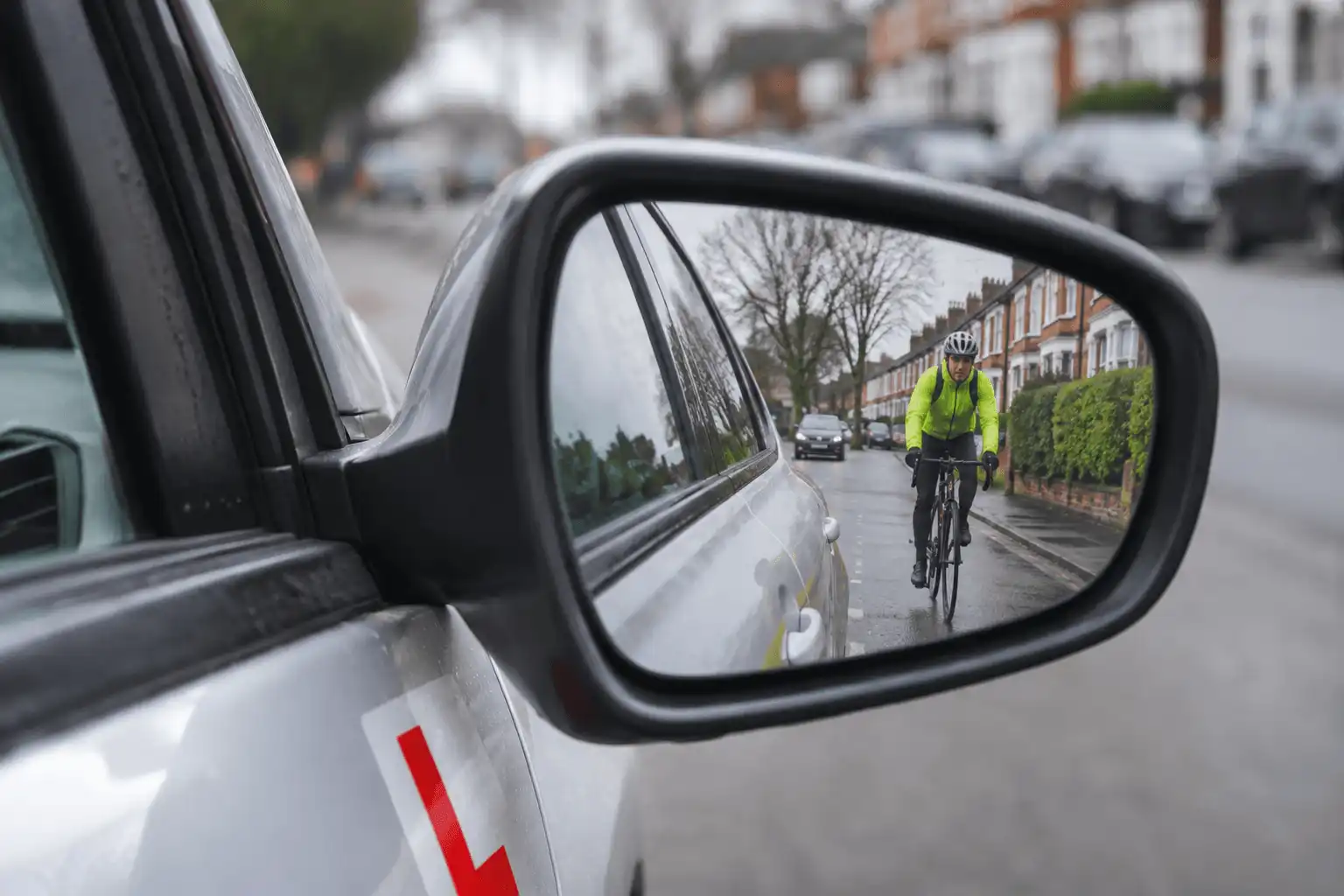
What the examiner marks on your test report
The examiner marks your driving in 24 areas on the test report, and DVSA emails you the completed list after the test. Each area has its own box, and the examiner records driving, serious and dangerous faults in it. The 24 areas are grouped below:
- Before you drive: eyesight check, precautions, vehicle checks (the show me, tell me questions), ancillary controls.
- Car control: control, move off, controlled stop, positioning, position and normal stops.
- Observation and planning: use of mirrors, signals, awareness and planning, judgement, response to signs and signals.
- Road and traffic: junctions, pedestrian crossing, following at a safe distance, clearance to obstructions, use of speed, progress.
- Manoeuvres: forward park, reverse park, reverse or right.
- Not counted: fuel-efficient driving, which is assessed and does not affect the result.
Source: GOV.UK, understanding your driving test result for the car driving test (updated 21 April 2022, checked 13 November 2026).
Read your report by area rather than by total. Three driving faults spread across 3 areas is ordinary; 3 in the junctions box is the habit that becomes a serious fault. Our guide to what happens on a UK driving test walks through the drive those 24 areas are marked on.
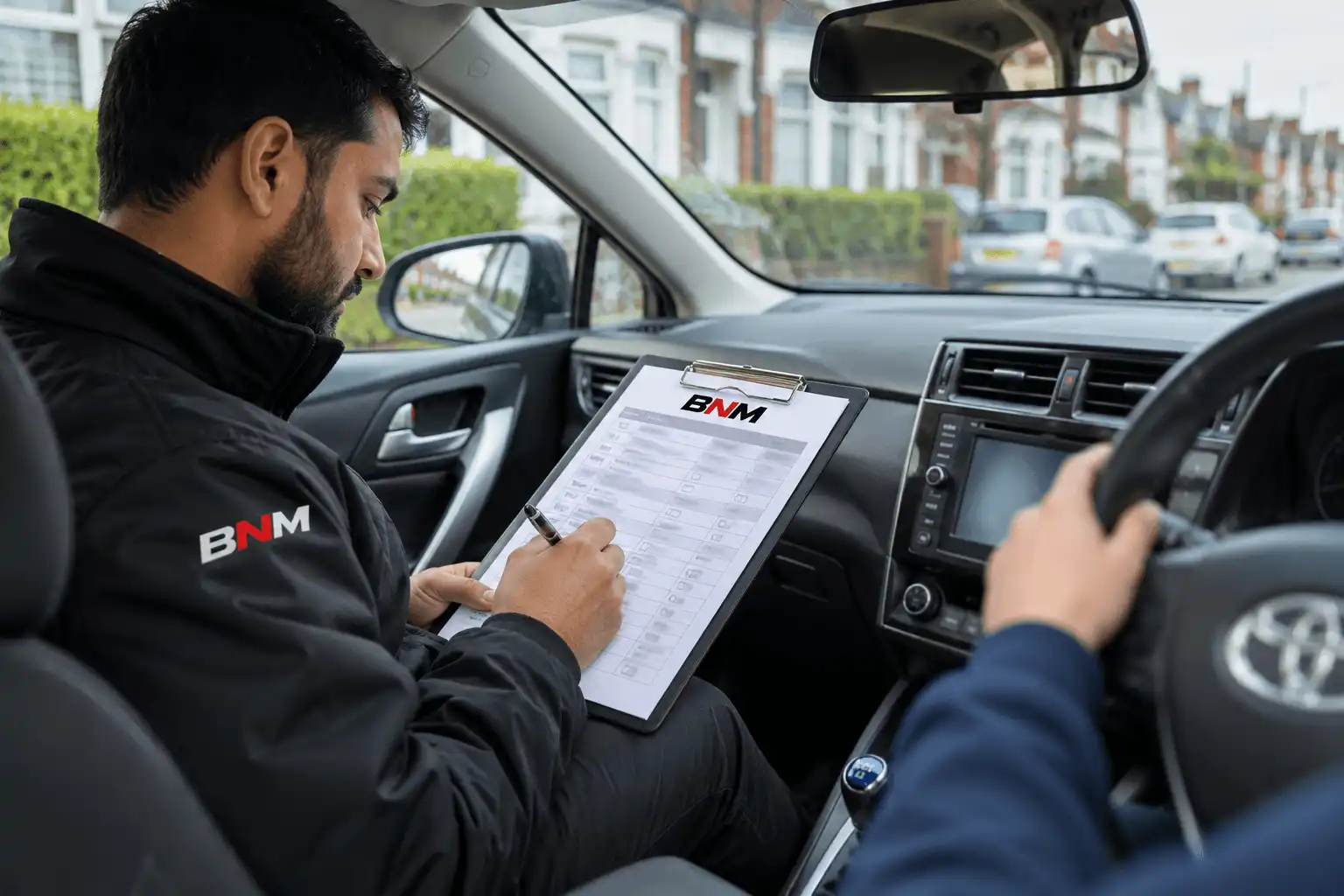
Which faults do learners get most often?
Junctions – observation is the fault learners get most often, and it has topped the DVSA list every year since 2022-23. The table below gives the top 10 faults recorded on car tests in April 2025 to March 2026:
| Rank | Fault recorded |
|---|---|
| 1 | Junctions – observation |
| 2 | Mirrors – change direction |
| 3 | Junctions – turning right |
| 4 | Response to signs – traffic lights |
| 5 | Control – steering |
| 6 | Move off – safely |
| 7 | Response to signs – road markings |
| 8 | Response to signs – traffic signs |
| 9 | Positioning – normal driving |
| 10 | Maintain progress – speed |
Source: DVSA table DRT121F, top 10 faults made in car driving tests, published 25 June 2026.
Observation and mirrors fill the top 2 places, and 3 of the 10 are responses to signs and signals. Both are looking faults rather than driving faults: the car goes where it should, and the driver has not checked first. Junctions appear twice, at ranks 1 and 3.
What does “examiner took action” mean?
Examiner took action, shortened to ETA, means the examiner stepped in to avoid an incident (GOV.UK). That covers telling you to do something, or taking control of the car. It appears on your result next to the fault it relates to.
ETA is a note on the report, not a fourth type of fault. The fault beside it carries the result, and an incident the examiner had to prevent is normally marked serious or dangerous. Verbal action counts as well as the controls: a word from the examiner to stop you pulling out is still action taken.
Finding your faults before the test
Finding your faults before the test is what a mock test is for. A mock test with BNM costs £45, runs the full 35 minutes. It is marked across the same 24 areas, so your repeats show up on paper in time to fix them.
BNM covers 3 test centres, and their pass rates differ: Mitcham 47.0%, Morden 51.0% and Tolworth 53.6% in 2025-26. The Great Britain rate was 50.0% (DVSA). Practising the roads around your own centre is the cheapest way to cut faults. The junctions that collect observation faults are the ones you meet on the day.
A fail costs more than the pride. At BNM a retest comes to at least £277: the £62 test fee, £140 test car hire and the £75 lesson before it. Two more hours of practice is the cheaper option. Our guide to passing your driving test first time sets out the rest of the preparation. The full DVSA figures sit in the driving test data for cars.
Frequently asked questions
How many minors can you get on a driving test?
You can get up to 15 driving faults, called minors, and still pass. The 16th is a fail. You also need no serious or dangerous fault, whatever your minor count.
What is the difference between a minor and a major?
A minor, properly a driving fault, is not potentially dangerous. A major is a serious or dangerous fault: serious means potentially dangerous, dangerous means actual danger to someone or something.
Do minors add up to a major?
Only when they are the same fault. Repeating one driving fault can turn it into a serious fault. Fifteen different minors stay minors.
Does one serious fault fail your driving test?
Yes. One serious or dangerous fault is a fail, even with no other faults on the report. The examiner still finishes the route and marks the rest of the test.
What does ETA mean on a driving test report?
ETA stands for examiner took action. It records that the examiner spoke to you or used the controls to avoid an incident, and it sits beside the fault it relates to.
How many people pass with no faults at all?
50,787 car tests were passed with zero faults in 2025-26, which is 5.1% of passes and 2.5% of all tests (DVSA). About 19 passes in 20 carry at least one driving fault.
Will the examiner stop the test if you make a serious fault?
No. GOV.UK says the examiner stops a test only if your driving is a danger to other road users. A serious fault on its own does not end the drive.
Can you see your faults after the test?
Yes. The examiner names your faults at the test centre, and DVSA emails the completed report listing every driving, serious and dangerous fault by area.
From driving test faults to an intensive driving course in South London
BNM Driving School is a local, independent driving school based in Hackbridge (SM6). Our DVSA-approved instructors teach manual and automatic lessons across South and South West London, and prepare learners for tests at Mitcham, Morden and Tolworth. Our learners have a 98% pass rate, and more than 2,000 have passed with us.
Driving faults, serious faults and dangerous faults all come down to habits built in lessons, which is where they are cheapest to fix. Learners with a deadline take our 30-hour intensive course, which includes a marked mock test on the routes around your centre.