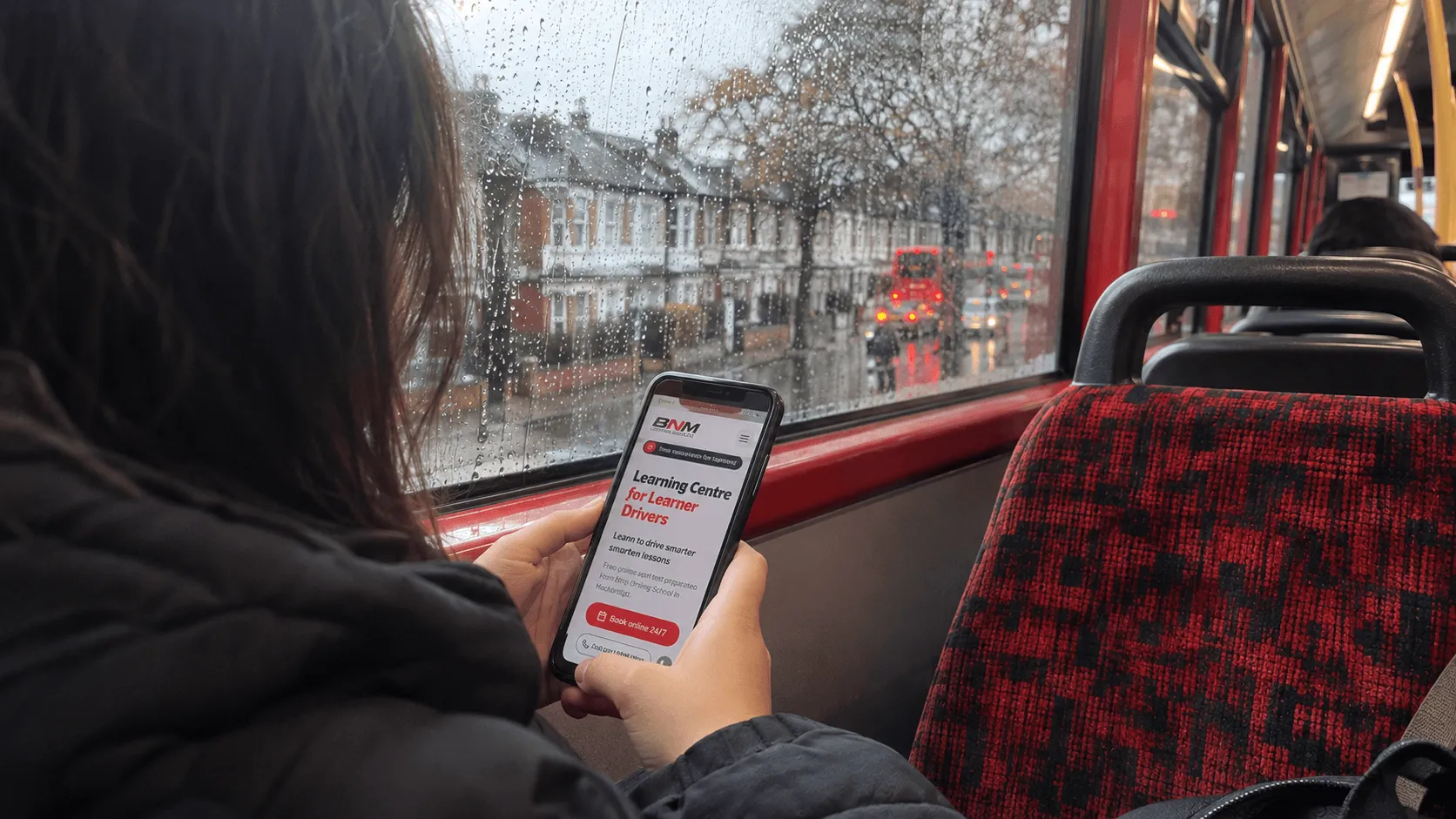
The driving theory test costs £23 and has 2 parts: 50 multiple-choice questions (pass mark 43) and a hazard perception test (pass mark 44 out of 75). Below are the test format, who can take it and how to book. Then come test day, how hazard perception is scored, the pass rate and the support on offer. Last are retakes, revision and what to do after you pass.
What is in the driving theory test?
The driving theory test has 2 parts, booked and taken as one test: 50 multiple-choice questions, then a hazard perception test. You must pass both parts to pass the test. The table below compares the 2 parts on what you do and the pass mark:
| Part | What you do | Pass mark |
|---|---|---|
| Multiple-choice questions | Answer 50 questions in 57 minutes. Three of them are about a silent video of a driving situation | 43 out of 50 (86%) |
| Hazard perception | Watch 14 video clips of everyday road scenes and click when a hazard starts to develop | 44 out of 75 (59%) |
Sources: GOV.UK theory test pages (checked 6 November 2026).
The multiple-choice part lets you flag questions and go back to change any answer. You can finish early once you’ve answered all 50. A break of up to 3 minutes comes before the hazard perception part. The hazard perception part gives you no way back, because each clip plays once.
The question bank changed for 2026. DVSA announced on 13 August 2025 that it now includes enhanced CPR content and, for the first time, questions on automated external defibrillators (AEDs). DVSA says the changes add no cost, test time or difficulty. The test draws its 50 questions from a bank of more than 700.
Who can take the driving theory test?
You can take the driving theory test from your 17th birthday, and you need a provisional driving licence to book it. The list below sets out the 4 rules on who can take the car theory test (GOV.UK):
- Age: 17 or over, or 16 if you get, or have applied for, the higher rate of the mobility part of PIP.
- Licence: a provisional driving licence in your own name.
- Residence: at least 185 days lived in England, Wales or Scotland in the 12 months before test day.
- Exemptions: none for new drivers, but you skip it when you upgrade an automatic licence to manual or hold a category B1 licence from before 1 February 2001.
Apply for your provisional licence before anything else, because the theory booking needs the licence number. Our guide to learning to drive in South London puts the licence, lessons and tests in order.
How do you book the driving theory test?
To book the driving theory test, use the GOV.UK booking service with your licence number, an email address and a debit or credit card. The fee is £23 for a car test. Booking takes 5 steps:
- CheckYou meet the 4 rules above, including the provisional licence.
- OpenThe service to book your theory test on GOV.UK.
- ChooseA test centre and date. South London learners can book at Morden or Croydon, among other centres.
- RequestAny support you need, such as extra time, in the booking itself.
- PayThe £23 fee, then keep your confirmation email.
Croydon’s practical test centre closed, but its theory centre is open: DVSA recorded 43,848 theory tests there in 2025–26, against 42,181 at Morden. To change a booking, give at least 3 full working days’ notice, or you pay again. Monday to Saturday count as working days, and Sundays and public holidays don’t. You can claim a refund for short-notice changes after an illness or injury, a bereavement, a school or college exam, or a stolen driving licence.
What happens on theory test day?
On theory test day, arrive 15 minutes before the start with your UK photocard driving licence. Late arrivals have their test cancelled and lose the fee. Plan these 5 things for the day (GOV.UK):
- Arrive 15 minutes early: a late arrival means a cancelled test and no refund.
- Bring your photocard licence: a paper licence needs a valid passport as well, and a Northern Ireland licence needs its paper counterpart.
- Switch off every device: phones, smart watches and fitness trackers must be off before you enter the centre.
- Use the locker: coats, hats, earphones, wallets, pens and small bags go in a locker, or a clear plastic box if the centre has none.
- Expect security checks: staff match your face to your licence photo and check that your pockets are empty and your sleeves rolled up.
You get your result at the test centre, straight after the test. No waiting area exists for friends or family, so travel alone or arrange a pick-up time.
How is hazard perception scored?
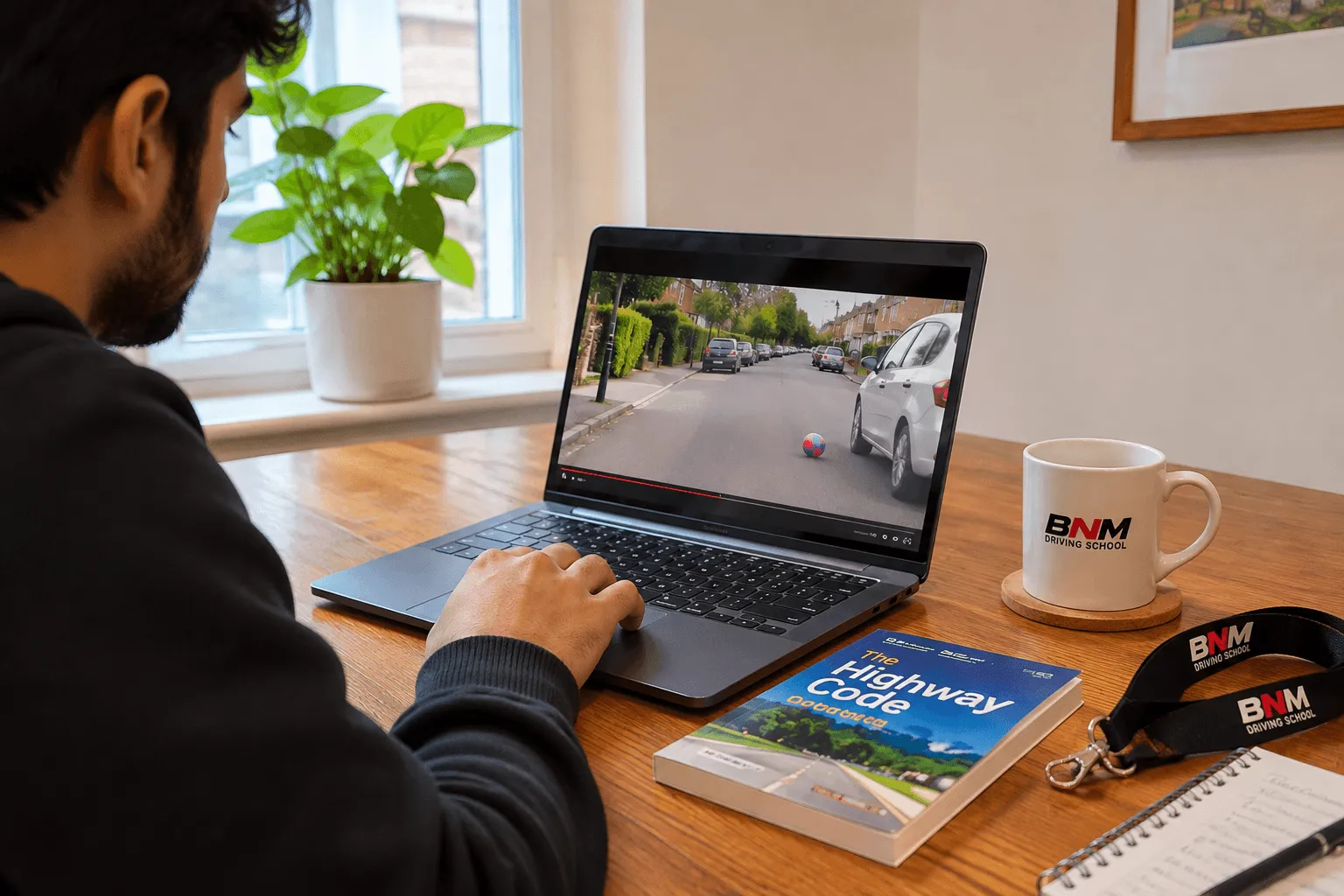
Hazard perception scores up to 5 points for each developing hazard, and you need 44 points out of 75 to pass. The test has 14 clips. Each clip contains at least 1 developing hazard, and one clip contains 2, which makes 15 hazards and 75 points.
A click as soon as the hazard starts to develop earns 5 points, and a later click earns fewer. Clicking continuously or in a pattern scores nothing on that clip. A wrong click costs no points, and you get one attempt per clip. The pass mark of 44 out of 75 is about 59%, against 86% for the multiple-choice part.
What is the driving theory test pass rate?
The driving theory test pass rate in Great Britain was 44.8% in 2025–26, from 2,924,430 tests (DVSA). The table below compares that figure with 2007–08, with 17-year-olds and 18-year-olds, and with the Morden and Croydon theory centres:
| Group | Tests | Pass rate |
|---|---|---|
| Great Britain 2025–26 | 2,924,430 | 44.8% |
| Great Britain 2007–08 | 1,451,348 | 65.4% |
| 17-year-olds 2025–26 | 694,029 | 51.1% |
| 18-year-olds 2025–26 | 262,871 | 40.1% |
| Morden centre 2025–26 | 42,181 | 51.7% |
| Croydon centre 2025–26 | 43,848 | 45.8% |
Sources: DVSA DRT111A (updated 3 September 2026), DRT111C and DRT112A (published 17 July 2026). The rates count tests, not people, so a retake counts as a second test.
The pass rate fell from 65.4% in 2007–08 to 44.8%, so fewer than half of all tests are passes today. Age matters: 17-year-olds passed 51.1% of tests, and 18-year-olds passed 40.1%. Every candidate sits the same test format, so choose a centre on distance and available dates, not on its pass rate.
What support can you get for the driving theory test?
DVSA offers 5 types of support for the car theory test, and you ask for them when you book. The list below names each one (GOV.UK):
- Extra time: more time for the multiple-choice part.
- Voiceover: the test read to you through headphones, in English or Welsh, with replays as often as you need.
- Reader and scribe: a member of staff reads the screen aloud and records your answers.
- Reworded questions: staff put questions in simpler language, but not the technical terms.
- British Sign Language: a BSL video beside each question, plus a free interpreter, lip speaker or hearing loop on request.
For extra time, a reader or rewording, you send proof of your reading difficulty, such as a letter or report from a teacher, doctor or occupational therapist. An online dyslexia screening product also counts. DVSA decides which support you get. Our guide to driving lessons with ADHD, dyspraxia or dyslexia covers the practical side too.
What happens if you fail the driving theory test?
If you fail the driving theory test, you must book and sit the full test again, at least 3 working days after the first. A pass in one part doesn’t carry over. You rebook through the same GOV.UK service, and the £23 booking fee applies again.
Your result letter shows which sections you didn’t score enough points on. Use it to decide what to practise: a low score on the multiple-choice part points to the Highway Code and road signs, and a low score on hazard perception points to clip practice.
How do you revise for the driving theory test?
Revise with the official DVSA materials first, because the free practice questions use the same topics as the real test. GOV.UK lists 7 official resources:
- The Highway Code: the rules every multiple-choice question draws on.
- Know your traffic signs: the official guide to road signs.
- Driving – the essential skills: the DVSA book on driving technique.
- Official DVSA Theory Test kit: questions and hazard perception clips on PC, Mac or as an app.
- Official DVSA Hazard Perception app: clip practice for Apple and Android.
- Traffic sign flashcards: 128 cards for learning signs.
- The free practice theory test on GOV.UK: questions that aren’t used in the real test.
Start revising in your first weeks of lessons. DVSA Ready to Pass surveys (July 2024 to April 2025) found that learners with no lessons before their theory test were 25% more likely to fail their driving test first time.
What happens after you pass the driving theory test?
After you pass the driving theory test, you get a letter with a pass certificate number, and the certificate lasts 2 years. You need the number to book your practical test, which costs £62–£75 (GOV.UK, checked 20 October 2026). Our guide to the driving test booking rules explains the booking steps for 2026.
The 2 years run from your theory pass. If you don’t pass the practical test in that time, you sit the theory test again. Book your lessons so that you’re test-ready well inside the 2 years. You don’t need a theory pass to start lessons, so many learners revise and learn to drive together.
Frequently asked questions
How much does the driving theory test cost?
The car theory test costs £23 (GOV.UK). You pay when you book on GOV.UK, and a retake needs a new booking at the same fee.
What is the pass mark for the driving theory test?
You need 43 out of 50 on the multiple-choice questions and 44 out of 75 on hazard perception. You must pass both parts to pass the test.
How old do you have to be to take the driving theory test?
You can take it from your 17th birthday. At 16, you can take it if you get, or have applied for, the higher rate of the mobility part of PIP.
How long does the theory test pass certificate last?
The certificate lasts 2 years. If you don’t pass your driving test within that time, you must sit the theory test again.
How long must you wait to retake a failed theory test?
You wait at least 3 working days. You must book and sit the full test again, even if you passed one part.
What happens if you arrive late for the theory test?
Your test is cancelled and you lose your money. GOV.UK says to arrive 15 minutes before the start, with your photocard driving licence.
Can you take the theory test before having driving lessons?
Yes. You need a provisional driving licence to book the theory test, not lessons. Many learners revise and start lessons together.
Can you take the theory test in another language?
No. You can take the car theory test only in English, Welsh or British Sign Language (GOV.UK). A voiceover is available in English or Welsh, and you ask for it when you book.
Driving theory test to driving lessons in South London
BNM Driving School is a local, independent driving school based in Hackbridge (SM6). Our DVSA-approved instructors teach manual and automatic lessons across South and South West London. Our learners have a 98% pass rate, and more than 2,000 have passed with us.
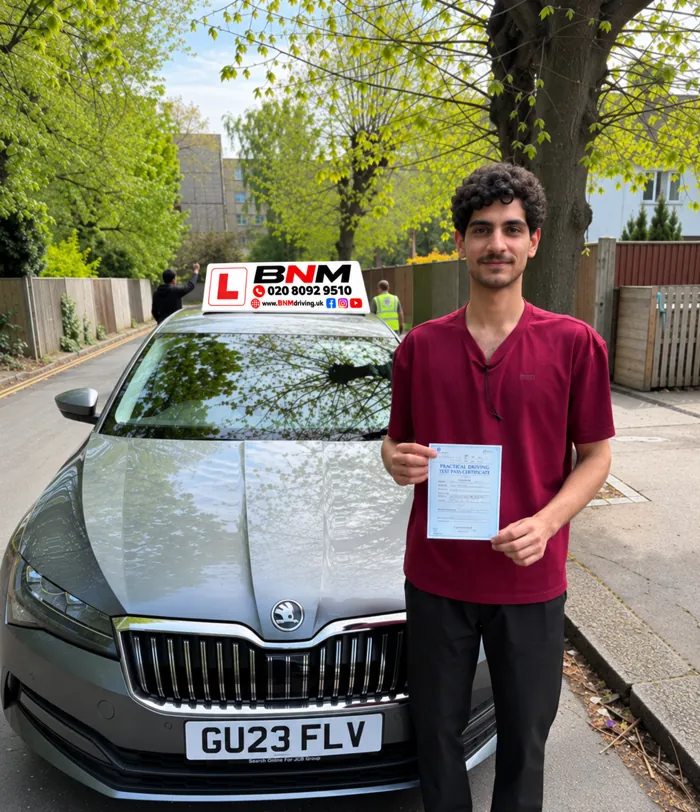
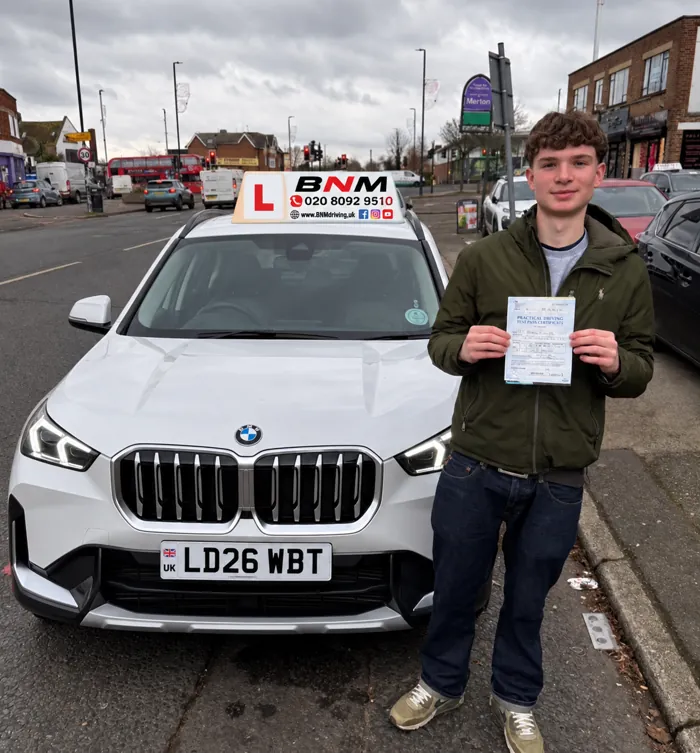
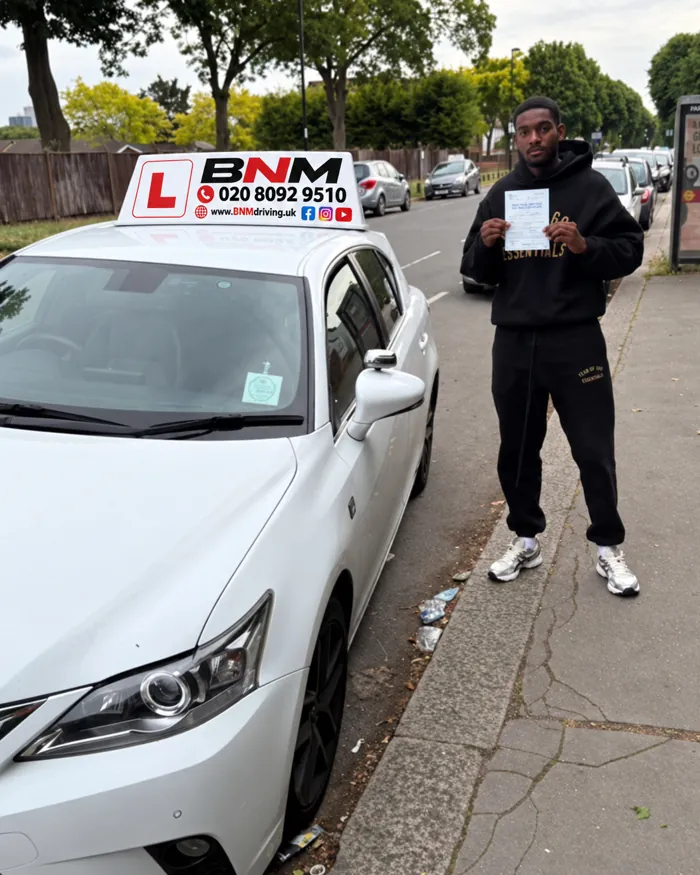
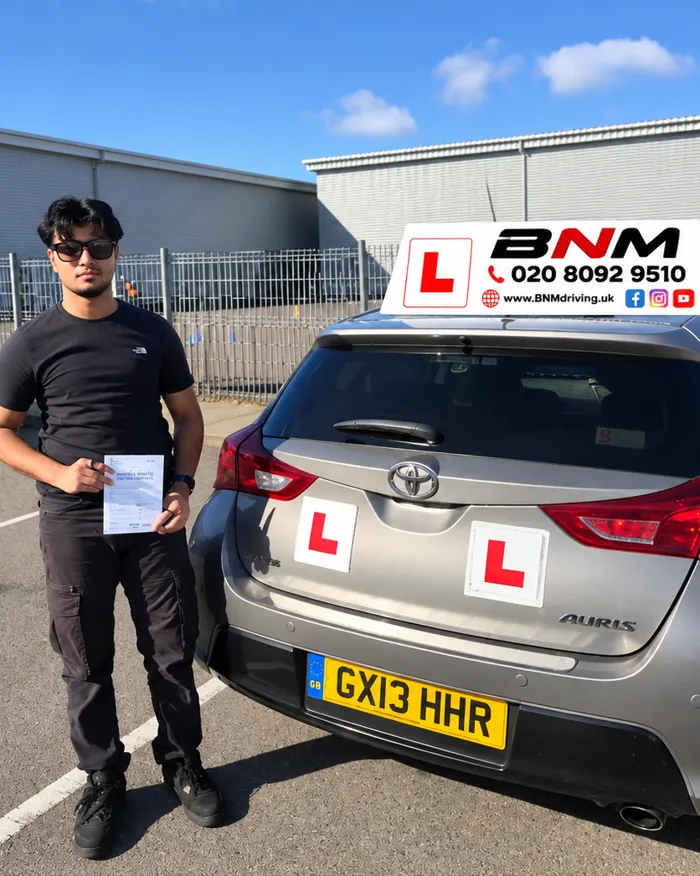
Pass the driving theory test, and the practical lessons come next. See our driving lesson prices, including the first lesson, and start learning with an instructor who prepares you for the practical test.