Choose manual for a licence that covers every car, or automatic to pass with about 5–10 fewer hours of lessons and an easier time in London traffic or an electric car. Below are the key differences, when each gearbox is the better choice, pass rates, time and cost, and what suits South London roads.
Manual or automatic: the key differences
Manual and automatic driving lessons differ in 6 main ways, from what your licence covers to how you handle stop-start traffic. The table below compares them.
| Difference | Manual | Automatic |
|---|---|---|
| What your licence covers | Manual and automatic cars | Automatic cars only |
| Hours of lessons | Around 45 hours on average (DSA research) | Often 5–10 hours fewer |
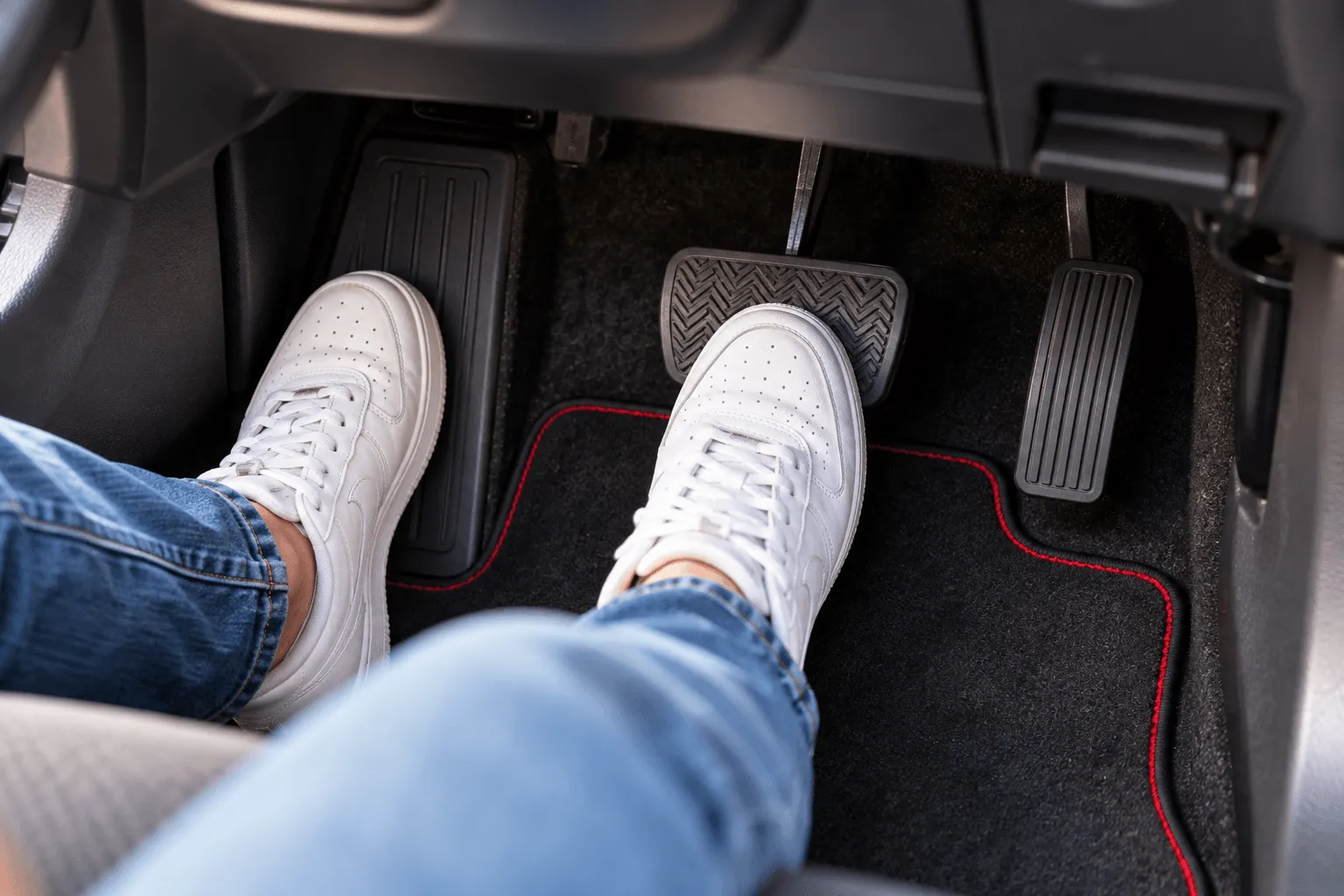
| Skills to learn | Clutch control, gear changes and hill starts | No clutch or gears, so more attention on the road |
| Stop-start traffic | Constant clutch work in queues | Brake and accelerator only |
| Electric and hybrid cars | Covered, as the licence includes automatics | Covered, as electric cars are automatic |
| Switching later | Nothing to do | A second practical test in a manual car |
The short verdict is that manual gives you the widest licence and automatic gives you the quickest route to passing. The practical test is the same for both: the same routes, manoeuvres and fault marking.
When is manual the better choice?
Manual is the better choice when you need to drive manual cars after you pass. There are 4 situations where learning manual pays off:
- Family car: the car you’ll practise in or borrow after passing is a manual.
- Work driving: your job may need you to drive a manual van or pool car.
- One licence: you want a licence that covers every car, with no second test later.
- Time to spare: you can fit in the extra 5–10 hours that clutch control and gears usually take.
The extra hours in a manual usually go on clutch control, hill starts and choosing the right gear at junctions and roundabouts.
When is automatic the better choice?
Automatic is the better choice when passing sooner and driving with less to manage matter more than a full licence. There are 5 situations where automatic usually wins:
- Faster pass: you want to reach test standard with about 5–10 fewer hours of lessons.
- Nerves: fewer controls leave more attention for junctions, mirrors and other road users.
- City driving: you’ll mostly drive in London queues, 20 mph zones and stop-start traffic.
- Electric or hybrid car: the car you’ll drive after passing is electric or a hybrid, which are automatic.
- A deadline: you have a test date, a job start or a move coming up and limited weeks to learn.
Whether automatic is actually easier depends on the learner. For most people, the biggest change is not having to think about gears at junctions and roundabouts.
Do automatic learners pass less often?
Automatic learners pass slightly less often across Great Britain. In 2025–26, the automatic pass rate was 44.6%, according to the AA Driving School’s analysis of DVSA data (August 2026). The overall car pass rate was 50.0% (DVSA), which puts the manual rate at about 52%.
The table below shows the 2025–26 pass rate for all car tests and for automatic tests at the 3 test centres BNM covers.
| Test centre | All car tests | Automatic tests |
|---|---|---|
| Mitcham | 47.0% | 45.4% |
| Morden | 51.0% | 49.8% |
| Tolworth | 53.6% | 49.9% |
| Great Britain | 50.0% | 44.6% |
Pass rates for April 2025 to March 2026. Test centre figures: DVSA DRT122A and DRT122E (June 2026). Great Britain automatic figure: AA Driving School analysis of DVSA data (August 2026). The manual rate is our estimate from these figures.
At Mitcham and Morden, the gap is only 1–2 points. The gearbox changes the skills you learn, not the test standard, so preparation on local routes matters far more than the choice of car.
How do time and cost compare?
Automatic learners usually need 5–10 fewer hours of lessons than manual learners, because there’s no clutch, gear changing or hill-start technique to master. Our guide to how many driving lessons you need breaks the hours down by learner type.
Across the UK, automatic lessons often cost £2–£5 more an hour. Fewer hours can bring the total cost to pass close to the manual total. Our comparison of whether automatic driving lessons are more expensive than manual works through the totals and includes a quick quiz.
Choosing for London roads
For London roads, automatic makes stop-start driving simpler, while manual gives you a licence that covers every car. South London test routes and everyday driving include 4 conditions where the gearbox makes a difference:
- Queues: slow traffic on main roads means constant clutch work in a manual and none in an automatic.
- 20 mph zones: many residential streets are 20 mph, where a manual sits between first and second gear.
- Bus lanes and red routes: parts of the A23 and A24 have bus lanes and strict stopping rules. Reading the road matters more than changing gear.
- Emission rules: London’s Ultra Low Emission Zone charges older, more polluting cars every day they drive in it. Electric cars meet its standards, and they’re all automatic.
Learners who will drive mostly in London after passing usually get the most from automatic. Learners who will share a family manual car, or may drive manual vehicles for work, are better served by manual.
Can you switch from automatic to manual later?
Yes. You can upgrade an automatic licence by passing a practical test in a manual car. You don’t need a new provisional licence or another theory test, and you can keep driving automatics if you fail. GOV.UK explains how to upgrade an automatic car driving licence to a manual one.
Will manual cars disappear after 2030?
No, not straight away. From 2030, new petrol and diesel cars can no longer be sold in the UK. From 2035, every new car must be zero emission (GOV.UK). Existing manual cars can still be driven and sold second-hand, so manual cars will stay on the road for years. Automatic tests have grown from about 4% of car tests in 2007–08 to 29.4% in 2025–26 (AA analysis of DVSA data).
Frequently asked questions
Is it better to learn manual or automatic?
Manual is better for a licence that covers every car. Automatic is better for passing sooner and for London traffic or an electric car. Choose by the car you’ll drive after passing.
Can I drive a manual car with an automatic licence?
No. An automatic licence only covers automatic cars. To drive a manual, you need to pass a practical test in a manual car.
Do you need fewer lessons in an automatic?
Yes, usually 5–10 fewer hours, because there’s no clutch or gears to learn. Nervous learners often see the biggest difference.
Is the driving test different in an automatic?
No. The automatic test uses the same routes, manoeuvres, length and fault marking as the manual test.
Do automatic learners pass more often?
No. In 2025–26 the Great Britain automatic pass rate was 44.6%, below the 50.0% overall car pass rate. At Mitcham and Morden the gap was only 1–2 points.
Are all electric cars automatic?
Yes. Electric cars have no gears to change, so they drive like automatics and are covered by an automatic licence.
Manual or automatic driving lessons in South London with BNM
BNM Driving School is a local, independent driving school based in Hackbridge (SM6). We teach manual and automatic lessons in dual-control cars across South and South West London. Lessons cover the routes around the Mitcham, Morden and Tolworth test centres. Our learners have a 98% pass rate, and more than 2,000 have passed with us. Choosing manual or automatic comes down to the car you’ll drive after passing, and your first lesson helps you decide.
Want a licence that covers every car? See our manual driving lessons. Want to pass sooner and drive London traffic with less to think about? See our automatic driving lessons.