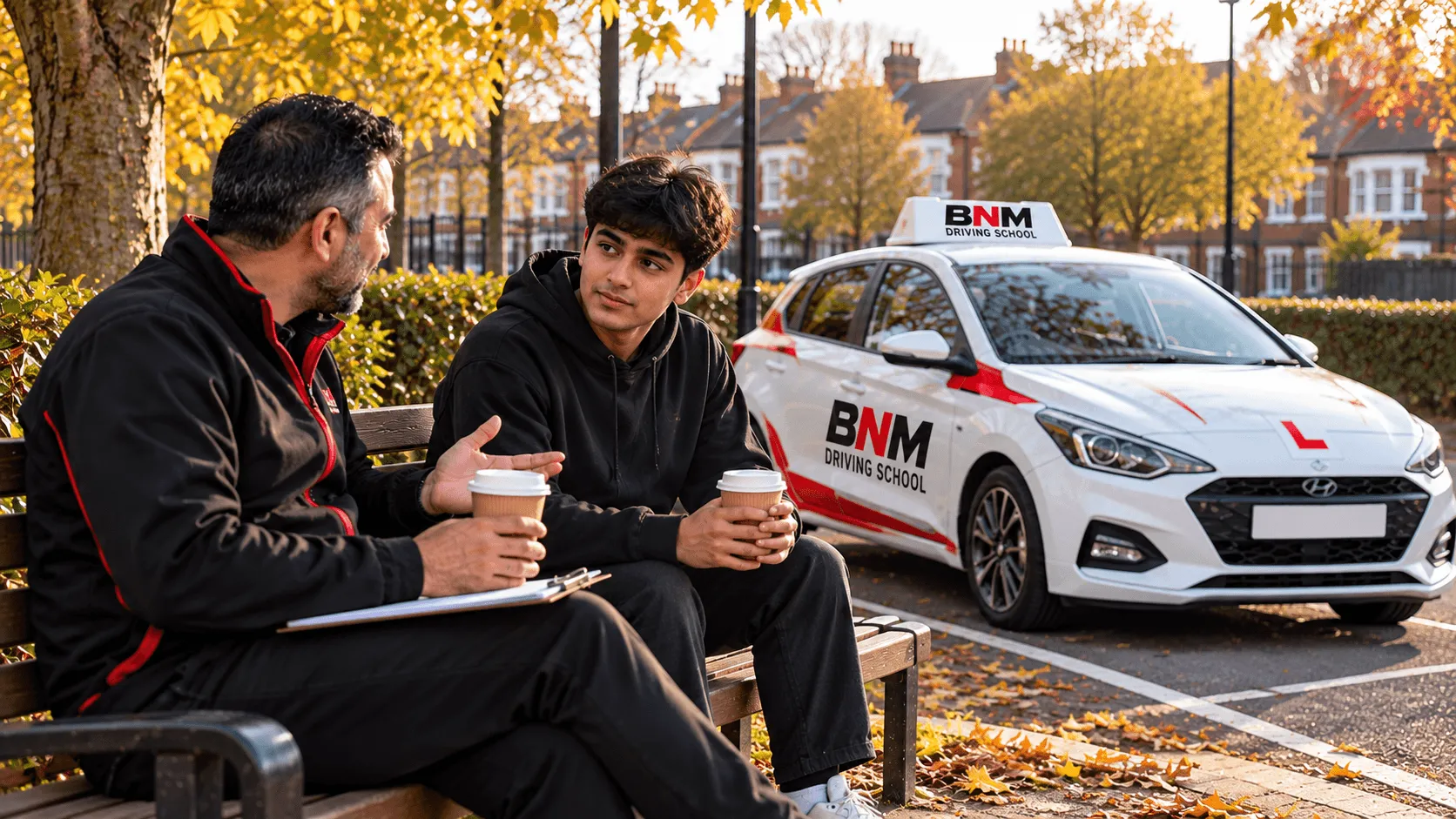
Yes, a 30-hour intensive driving course is worth it if you’ve passed your theory test, already have some driving experience and have a test date booked. Complete beginners usually need about 45 hours, so weekly lessons suit them better. Below are the conditions that make an intensive course worth it, its pros and cons, what pass rate data shows, cost, South London test waits and the alternatives.
When is an intensive driving course worth it?
An intensive driving course is worth it when 4 conditions are true. The more of them apply to you, the better a 1–2 week course works:
- Theory test passed: you need a theory pass to book the practical test, and the course is planned around that test.
- Some experience: you’ve already had lessons or private practice, so 30 hours is enough to reach test standard.
- Test date booked: your practical test is in the diary, so the course can end in the week before it.
- Time cleared: you can give up 1–2 weeks of daytime, with no work, exams or holidays in the way.
A learner who meets all 4 gets to test day with every skill fresh. Daily lessons leave no gap for skills to fade, which is the main reason an intensive course works.
When is an intensive course not worth it?
An intensive course isn’t worth it when you’re starting from zero or can’t book a test in time. There are 4 situations where weekly lessons usually serve you better:
- Complete beginner: most beginners need 40–50 hours, so a 30-hour course ends before they’re test-ready.
- Nervous learner: 4–6 hours a day leaves little time to recover from a difficult lesson.
- No test date: skills learned in a week fade if the test is months away.
- Tight budget: paying for 30 hours at once is harder than spreading lessons over several months.
Hours vary widely by learner. Our guide to how many driving lessons you need breaks them down for beginners, automatic learners and nervous learners.
Intensive driving course pros and cons
An intensive course has 4 main pros and 4 main cons compared with weekly lessons. The two lists below set them side by side.
Pros of an intensive course
The 4 main advantages of an intensive course are:
- Speed: you reach test standard in 1–2 weeks instead of 4–6 months of weekly lessons.
- Retention: daily lessons mean less time relearning what you did last week.
- Focus: your full attention is on driving, with no long gaps between lessons.
- Planning: the course is built around one test date, with a clear finish line.
Cons of an intensive course
The 4 main disadvantages of an intensive course are:
- Fatigue: 4–6 hours of driving a day is tiring, and tired learners make more mistakes.
- Narrow experience: 1–2 weeks rarely includes night driving, heavy rain and every type of traffic.
- Little room for setbacks: one illness or a bad day leaves fewer lessons before the test.
- Upfront cost: you pay for all 30 hours at the start.
The cons matter most for beginners. A learner with 15–20 hours already behind them feels the pros and few of the cons.
Quiz: is an intensive course right for you?
Answer 4 quick questions for an honest recommendation.
1. Have you passed your theory test?
2. How much driving have you done?
3. Do you have a practical test date?
4. How do you feel about driving?
Build up your first 15–20 hours with weekly or semi-intensive lessons, then book your test.
Your instructor’s assessment on a first lesson always comes first.
Do intensive courses have higher pass rates?
Intensive courses have no official pass rate, because the DVSA doesn’t record how test candidates learned. In a 2011 freedom-of-information answer, the Driving Standards Agency (now DVSA) said it holds no pass rates for intensive courses. It added that the widely quoted 35% intensive pass rate isn’t an official figure.
Pass rates of 70% or more on course providers’ websites are their own figures. They usually count only learners who finished the course and took the test. A 2013 Dutch study by de Craen and Vlakveld, published in Accident Analysis and Prevention, found intensive and traditional learners needed the same number of attempts to pass.
For comparison, the Great Britain car pass rate was 50.0% in 2025–26, and 50.5% for first attempts (DVSA). At the 3 test centres BNM covers, the rate was 47.0% at Mitcham, 51.0% at Morden and 53.6% at Tolworth (DVSA, June 2026). Your result depends on reaching test standard, not on how fast you got there.
Are drivers who take intensive courses less safe?
The evidence on intensive course drivers’ safety comes from one small study. In the 2013 Dutch study, 43% of 35 intensive course drivers reported an incident in their first 2 years of driving, compared with 26% of 351 traditionally trained drivers. Both groups had trained for almost the same number of hours.
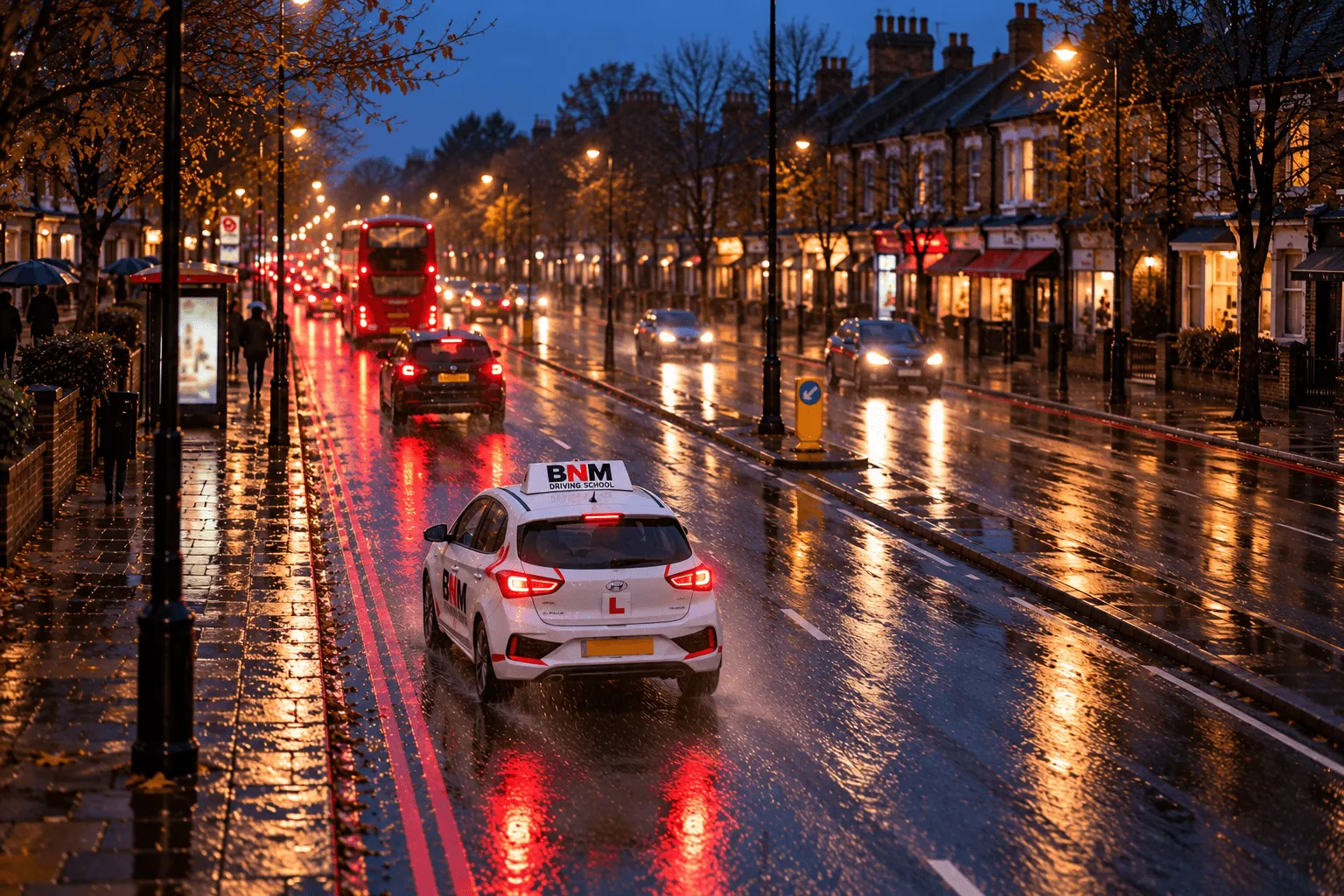
The study was small and relied on drivers’ own reports, so it doesn’t prove intensive courses are unsafe. It does support one practical step. Drive at night, in rain and on faster roads soon after passing, because a 1–2 week course rarely covers them all.
Does an intensive course cost more than weekly lessons?
No, not per hour. BNM’s 30-hour intensive course costs £1,125, which works out at £37.50 an hour with a mock test included. What changes the total is how many hours you need, not how quickly you take them.
The costly mistake is booking 30 hours when you need 45, then taking the test before you’re ready. With BNM, a failed test costs at least £277: a £62 retest, £140 test car hire and a £75 2-hour lesson before it. Our guide to what a failed driving test really costs sets out the full figures.
How do South London test waits affect an intensive course?
South London test waits of 16–23 weeks mean you book the test first and the course second. The median wait in September 2026 was 16.1 weeks at Mitcham, 19.1 at Morden and 23.1 at Tolworth (DVSA). The 5 steps below put an intensive course in the right order:
- Pass your theory testThe pass certificate lasts 2 years, and you need it to book the practical test.
- Book your practical testChoose the centre with the earliest slot: Mitcham, Morden or Tolworth.
- Get an assessment lessonAn instructor estimates how many hours you need before you commit to 30.
- Build your first hoursTake weekly lessons while you wait, if you’re a beginner.
- Finish with the intensive courseTime the course to end in the week before your test, with a mock test in the last days.
A course finished months before the test loses most of its advantage. Our guide to how long it takes to learn to drive shows how test waits shape the whole timeline.
What to do instead of an intensive course
There are 3 alternatives to a full intensive course, each slower but gentler. They suit beginners, nervous learners and anyone without a test date:
- Semi-intensive lessons: 2–3 two-hour lessons a week reach test standard in about 8–12 weeks.
- Weekly lesson blocks: one 2-hour lesson a week, booked in 10 or 20-hour blocks, takes 4–6 months.
- Weekly lessons, then intensive: build your first 15–20 hours weekly, then finish with intensive lessons before the test.
The third route combines the strengths of both. You learn the basics at a steady pace, then arrive at the test with every skill fresh.
Who an intensive course suits
An intensive course suits 4 types of learner who meet the conditions above. Each one has a reason to compress their lessons:
- Students: university holidays give 1–2 clear weeks before term starts.
- Working adults: a week of annual leave replaces months of evening lessons.
- Learners with experience: previous lessons, private practice or a foreign licence mean 30 hours is enough.
- Learners with a deadline: a new job, a move or a test date that’s already booked.
For parents paying for a teenager’s lessons, the same test applies. An intensive course is good value once your teenager has a theory pass, some hours behind them and a test date.
What does a 30-hour intensive course include?
BNM’s 30-hour intensive course includes 30 hours of one-to-one lessons over 1–2 weeks, planned around your practical test date. It includes a mock test on local test routes, in a manual or automatic dual-control car. Other schools’ courses vary in hours and extras, so compare what’s included as well as the price.
Frequently asked questions
Do intensive driving courses work?
Yes, for learners who have passed their theory test, have some driving experience and have a test date. For complete beginners, 30 hours is usually too few to reach test standard.
Can you pass your driving test in a week?
Yes, if you’re already close to test standard and your test falls at the end of the course. Most beginners need 40–50 hours, so a week of lessons rarely gets them there.
Do you need to pass your theory test before an intensive course?
Yes. You need a theory pass to book your practical test, and an intensive course is planned to finish just before that test.
Are intensive courses good for nervous learners?
Usually not. 4–6 hours of driving a day leaves little time to recover from a hard lesson. Semi-intensive lessons, 2–3 a week, suit nervous learners better.
Are intensive course drivers more likely to crash?
The evidence is limited. One 2013 Dutch study found 43% of 35 intensive course drivers reported an incident in 2 years, against 26% of traditionally trained drivers. The study was small and self-reported.
How long is an intensive driving course?
Most intensive courses run for 1–2 weeks. BNM’s course is 30 hours over 1–2 weeks. Hours vary between schools, so check the total hours, not just the length.
Which test centre should I book for an intensive course in South London?
Book whichever of Mitcham, Morden or Tolworth has the earliest slot. Median waits in September 2026 were 16.1, 19.1 and 23.1 weeks (DVSA).
Are intensive driving courses worth it? Our 30-hour intensive course in South London
BNM Driving School is a local, independent driving school based in Hackbridge (SM6). We teach manual and automatic lessons in dual-control cars across South and South West London. Lessons cover the routes around the Mitcham, Morden and Tolworth test centres. Our learners have a 98% pass rate, and more than 2,000 have passed with us. An intensive course is worth it once you have a theory pass, some experience and a test date, and our instructors tell you honestly if 30 hours is right for you.
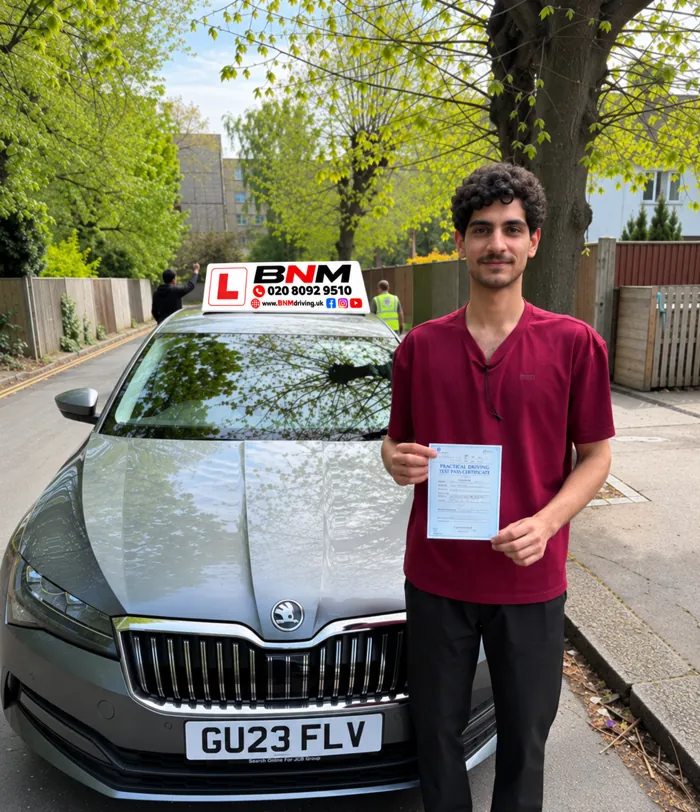
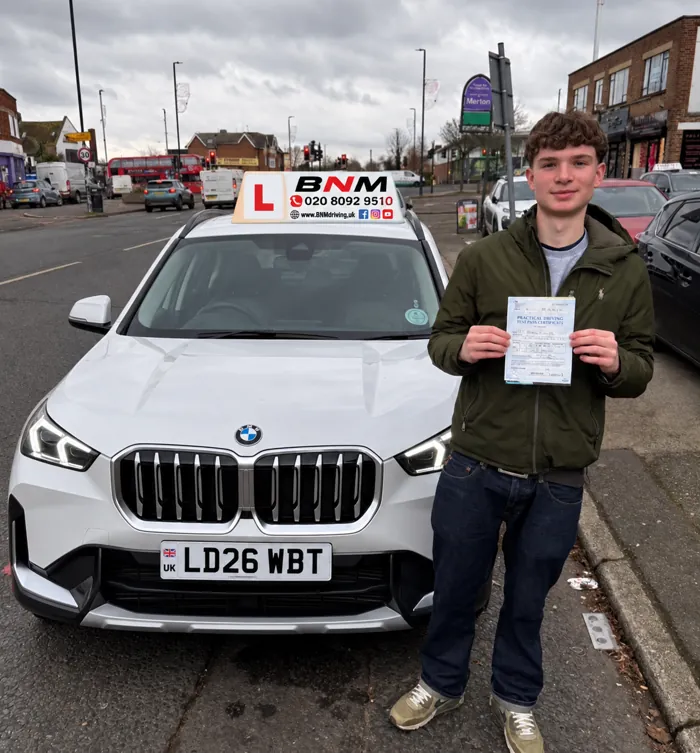
Theory passed and test booked? Our intensive driving course fits 30 hours into 1–2 weeks before your test, with a mock test on local routes included. Starting from zero? Begin with a £55 introductory lesson and an honest plan for your hours.